INTRODUCTION
After completing primary medical rehabilitation, people who have experienced severe brain injuries most often need appropriate professional help and counseling, as well as integration into a stimulating environment. Upon returning to their home environment, this enables them to progress, learn and supports them in finding new life goals and making sense of life after severe ABI. This is a long-term need for psychosocial and medical care or a long-term rehabilitation. We provide this kind of service at Center Naprej Maribor.
Center Naprej Maribor, Centre for Persons with Acquired Brain Injury
We are a specialized regional centre, as we provide highly intensive, individual and group long-term rehabilitation for people with acquired brain injury (ABI). All the services and programs, that we provide, are aimed towards the reintegration of the injured into social and professional life, achieving as much independence from others as possible and improving the quality of their lives, as well as the lives of their relatives. A comprehensive multidisciplinary professional approach is based on respect, cooperation and the individual needs of each person / individuality of the individual. This is a multi-layered, sensitive and demanding process, all parts of which are expertly designed and planned. Our process requires individualized, coordinated and continuous professional assistance that enables our user/ users to regain control of their life and maximum participation in the community. The rehabilitation program takes place every working day between 7 a.m. and 3 p.m., from 5 to 8 hours a day, the service is free of charge.
Long-term psychosocial and medical rehabilitation is one of the approaches in the lifelong period of rehabilitation. This approach attempts to address the long-term psychosocial and health needs of individuals with acquired brain injury (ABI), outside of a hospital and across the whole lifespan. Individuals with ABI, who are included in this kind of service, most often live at home. If they are unable to live at home, they may also live in group housing or other forms of accommodation.
What is long-term rehabilitation?
To ensure the quality of life after a brain injury, comprehensive care is necessary. From the moment of injury, throughout the acute period and towards comprehensive treatment in the post-acute period, that kind of care ensures the continuity of measures and procedures. In the case of long-term consequences on the individual's life, we talk about a long-term need for psychosocial and medical help, known as long-term rehabilitation.
This consists of professional support and help for the user of this kind of service and their relatives. Aim is to achieve an active and as independent as possible integration of users in the community, as well as maximum participation and independence in the community. The desired result is an increase in the quality of life and real-life skills.
The rehabilitation programs that we implement in the context of long-term rehabilitation are adapted to the needs and abilities of each individual with ABI and also modified when they change over time.
The programs we implement are:
- social care and protection programs,
- training for life, which includes: social skills training, social support and counselling, expanding the social network and providing access to leisure activities,
- psychological, psychotherapeutic and psychiatric help,
- occupational therapy,
- neurophysiotherapy,
- speech therapy,
- rehabilitation nursing,
- employment / work under special conditions,
- pedagogical programs of lifelong learning, sports programs,
- helping and working with relatives, who are considered as part of the rehabilitation process,
- above standard programs: summer rehabilitation camp, winter rehabilitation camp, day trips, celebrations...
Forms of implementation of individual programs:
- individual / individualized work with the user,
- working in a small group or work department,
- working in a large group,
- in simulated work and learning situations,
- in real-life situations and environments,
- with planned activities in the home environment.
Why long-term rehabilitation?
People with a brain injury often recover differently in the process of acute and post-acute rehabilitation. After medical rehabilitation is completed, there is a chance of a sudden decline, causing them to fall into a spiral of depression, despair and suicidal thoughts. The main reason for the post-rehab crisis called "The post-rehab slump" is often of a psychological nature. A person with a brain injury is told that a positive commitment to rehabilitation will increase positive outcomes. This is a clear goal, and more importantly, progress is usually seen as a result of hard work.
Within a year or two after the injury, the brain does its best to recover to some extent, which contributes to a sense of progress. Even after this point, improvements are possible, but they are less visible and much smaller. Improvements can be made by working on alternative strategies to compensate for the remaining deficits (both mental and physical). Inevitably, there comes a point, when it becomes apparent, that life will never be the same as it was before the injury. The logical step is to set new goals and paths in life. This is necessary in all areas of life; employment, self-care, forming new family roles and integrating into society and social activities. We must take into account that the achievement of these new goals and the daily functioning of the individual is often hindered by reduced self-confidence, a decline in cognitive abilities and social skills, frequent fatigue and lack of energy, weaker emotional control, frequent headaches and other physical limitations (Acquired brain injury, 2013).
At this point in life, when the injured person and his loved ones are faced with the long-term consequences of a brain injury, we are talking about the long-term need for psychosocial help or on long-term psychosocial rehabilitation.
The rehabilitation outcome of an injured person is the result of a comprehensive interaction between the neurological factors, environmental factors, social circumstances, personality characteristics, and the individual's psychological reactions to all of the above. Often, the success of rehabilitation is related to the severity of the injury and personality of an individual, adaptation skills, self-image, evaluation of one's own abilities, and emotional response to changed abilities and perspectives. A positive and responsible attitude towards rehabilitation and good family support is also important.
Long-term rehabilitation for ABI as a chronic condition
Acquired brain injury (ABI) can have lifelong and dynamic effects on individual's health and well-being. Research, to a large extent related to TBI in terms of long-term consequences, emphasizes that TBI, as well as all ABI, should be for many patients understood as a chronic health condition. Evidence shows that functional outcomes after TBI can show improvement or deterioration up to two decades after injury, and all-cause mortality rates remain elevated for several years (Wilson et al., 2017)
Despite growing awareness of the lifelong consequences of ABI, significant research gaps exist. Therefore, improvements in the understanding of chronic pathologies and their consequences for ABI survivors are needed, which could contribute to a long-term health management in this large human population.
In the past decade, there was a shift from the assumption that people with TBI reach a lifelong plateau after an initial period of recovery, to the acknowledgment of the reality, that a large proportion of individuals experience late sequelae and an evolving condition. This was first noted by Masel and DeWitt (2010). The same could be confirmed for the rest of the people with ABI, which we have already confirmed with research at Center Naprej (Vešligaj-Damiš, Puhak, 2016, Romanov et al., 2021)
In some cases, the injured experience a greater recovery than initially expected, while in other cases they experience a decline. As reported by Whiteneck and colleagues (2018), »nearly half of the individuals experienced a change in their cognitive function, between 1 and 5 years after injury, in 24% there was improvement and in 24% there was a decline«. Long-term studies show similar results, that people with moderate to severe TBI have approximately one-third decline in cognitive functions, after previously reaching a plateau (Corrigan and Hammond, 2013).
At Center Naprej, we actually see that even long after the injury, with continuous, goal-oriented and professionally designed rehabilitation, the user can experience positive changes in his abilities in various areas of live. Of course, there are also noticeable functional declines and increased risks, but those can, to some extent be reduced, with appropriate long-term rehabilitation.
However, evidence suggests that even a single TBI can increase the risk of subsequent neurodegenerative disorders and stroke (Postupna et al., 2021; Smith et al., 2021). In cases, where a person with ABI needs a long-term help and rehabilitation, due to the long-term problems and needs, we can see them develop a lifelong medical condition called chronic brain injury (CBI).
CBI damages the brain and other organ systems and can persist or progress throughout an individual's lifespan. CBI must be recognized and proactively managed as a lifelong condition to improve health, independent functioning and participation in society (Corrigan and Hammond, 2013).
Goal-oriented rehabilitation program – GORP
Long-term psychosocial rehabilitation program is a goal-oriented rehabilitation program, in which the person with ABI - hereafter referred to as user (of services), receives support and assistance to become an active participant in their own care. The services are adapted to the needs and abilities of each user and are modified according to the changed needs of the user, time since the injury and according to the speed of adaptation in changed conditions. Rehabilitation measures are aimed towards physical functions and structures, activities and participation, environmental and personal factors. The basic framework of GORP is to guide the user in becoming aware of his own deficiency, learning of self-control and regaining control over his own ability to perform activities in daily life.
The basis of the rehabilitation program in long-term rehabilitation is the Individual Rehabilitation Plan - IRP. IRP is a method of professional treatment based on the user's specific needs and it works according to the principle of the Deming cycle (Von Steinbüchel et al., 2010).
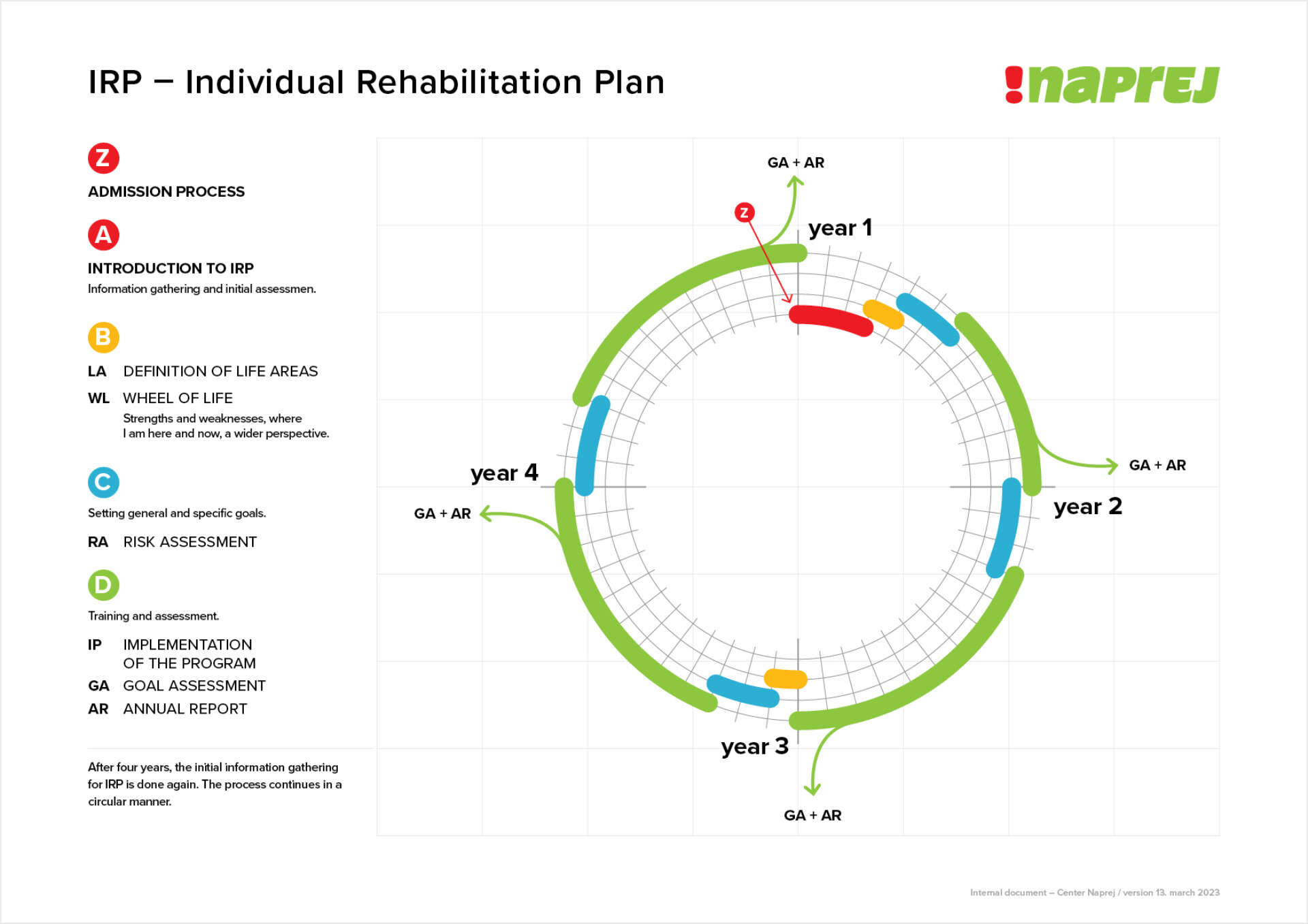
Figure 1: Individual rehabilitation plan – Internal document of Center Naprej, source: Vešligaj Damiš, 2019.
The essence of the individual plan lies in the shift of power from professional services and relatives, to the user. This means that the user is the one, who is making decisions about their life and trains for it. Individual planning creates circumstances that encourage people to recognize their wishes and needs and encourages them to find solutions. It helps the user to achieve his goals.
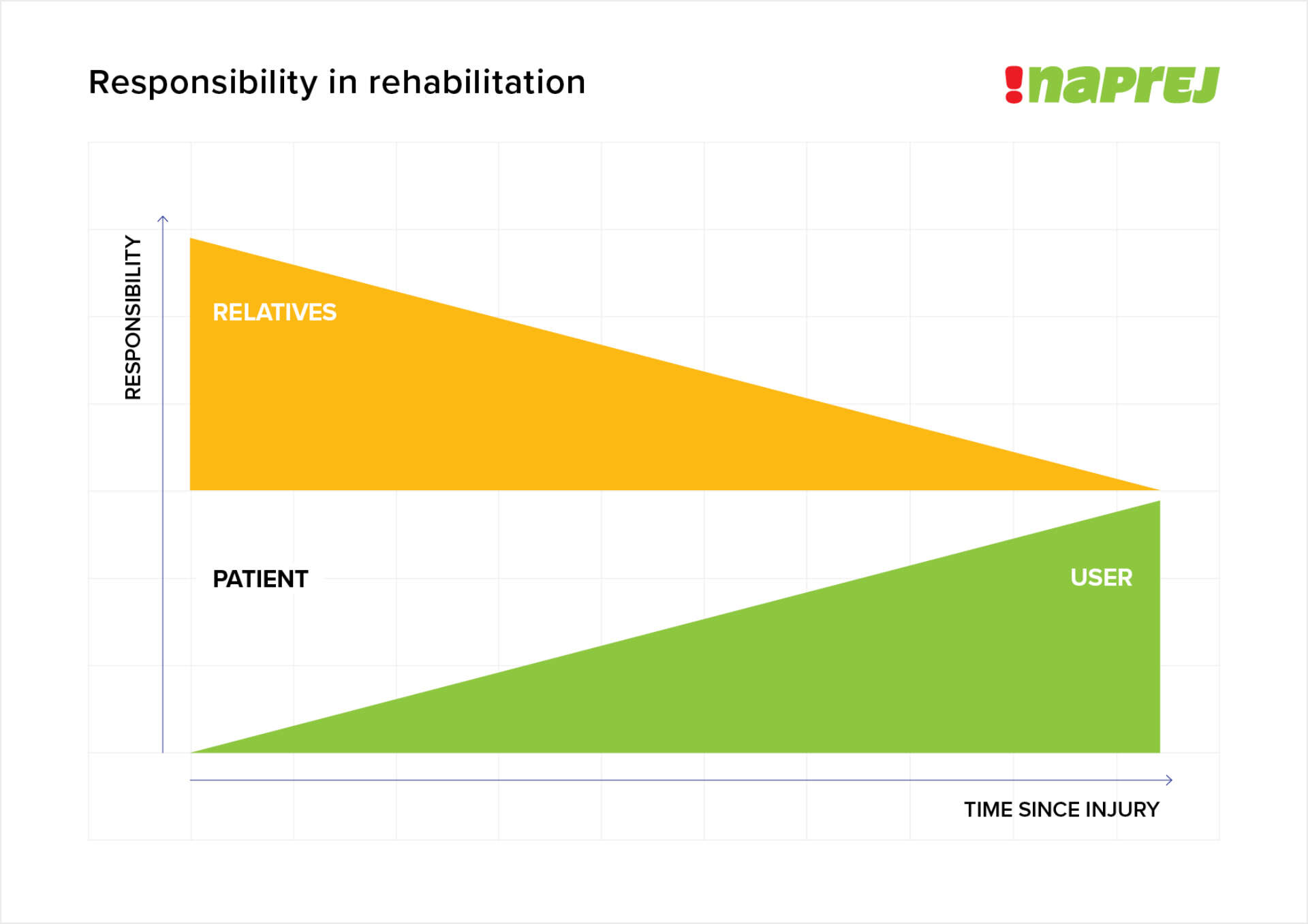
Figure 2: The change of roles in rehabilitation and self-awareness – internal document of Center Naprej, source: Vešligaj Damiš, 2019.
IRP helps the user with setting goals in life, with giving meaning in life and with improving daily routine and achieving a better quality of life (Qolibri). The difficulty of giving meaning in life after a severe ABI is a common problem that we perceive in most injured. Without appropriate life meaning and new goals being set, it is not possible to increase the sense of control over life and start the usually long road to independence (Levack, Siegert in Pickering, 2014).
In Center Naprej, the user’s rehabilitation goals are part of the Individual Rehabilitation Plan - IRP and are based on the user's specific needs and wishes.
Rehabilitation goals are selected in close collaboration with the person with ABI and are customized to increase the individual's ability to function as independently as possible. Setting rehabilitation goals with users with ABI is a central part of the rehabilitation, which includes the orientation, extent and time frame of rehabilitation measures (Prescott, Fleming and Doig, 2015).
A rehabilitation goal can motivate an individual to participate in therapy and can serve as a measuring tool of the outcome of the rehabilitation treatment (Bizovičar and Kovačec Herman, 2018). Goal planning refers to individual goals that are expected to be achieved through a specific plan that covers a certain time period and a specific area, e.g. with goals in the field of health, functioning field, psychological and social field, in the field of relationships, education or profession.
Rehabilitation planning is a dynamic process that includes the integration of information obtained through assessment, together with the individual and/or their relatives, who define the realistic results of rehabilitation (Vešligaj Damiš, 2020).
Goal-oriented programs are widespread as a tool of demonstrating progress and improving communication. The goals we set in rehabilitation depend on the functioning of the individual, health status, cognitive functioning, environmental factors and personal factors (Kos, 2018). Goals must be measurable, achievable and functional (Hernja Jesenšek Papež, 2017). We can use the “SMART” goal setting method (Bovend'Eerdt, Botell, Wade, 2009), which represents a simple way of measuring progress while at the same time ensures ultimate success.
Within the IRP, the user evaluates 10 life areas with the help of the Wheel of Life instrument (Internal instrument of Center Naprej). The instrument assesses the current state of the individual’s life after ABI. With it, the user recognizes how he spends his time, how satisfied he is with different parts of his life and where he stands in individual areas. In this way, he self-reflects on his life, becomes aware of individual areas in his life, and evaluates his general satisfaction in life. We use the Wheel of life as a tool for studying and setting user’s rehabilitation goals. It guides the user on the easiest way to re-establish life balance, create personal happiness and define what success is for them.
Based on the evaluations of the areas in the instrument Wheel of life and the completed self-reflection of life, the user formulates the rehabilitation goals that he wants to pursue. Self-assessment or goal evaluation is as important part of the rehabilitation process as assessment (carried out by the therapist), planning and implementation. It ensures that the implementation is consistent with the IRP and that the plan is modified as needed, if the user’s needs or circumstances change. Evaluation is carried out at the individual level and at the program level.
Activity |
Number of cases |
WHEEL OF LIFE – number of cases and average score for all included users (max. 100) |
46 (75,9 points) |
INDIVIDUAL REHABILITATION PLAN (IRP) |
47 |
RISK ASSESSMENT |
46 |
GENERAL REHABILITATION GOALS |
169 |
Achieved goals |
33 |
Goals that continue |
163 |
Completed but unachieved goals |
4 |
New goals |
30 |
SPECIFIC REHABILITATION GOALS |
749 |
Achieved goals |
120 |
Goals that continue |
727 |
Completed but unachieved goals |
27 |
New goals |
113 |
REGULAR ANNUAL TEAM MEETING |
35 |
EVALUATION OF USERS' GOALS |
48 |
ANNUAL USER'S REPORTS |
49 |
For the purpose of evaluating the user's rehabilitation goals, we hold regular annual team meetings. At the team meeting, the user presents his point of view and satisfaction with the involvement in rehabilitation programs, achievement of his goals and expresses their wishes and suggestions. User’s relatives have the opportunity to tell how the results of rehabilitation affect their life at home. Employees also present the user's progress and factors that influence the direction of his/her rehabilitation. At the end of the meeting, on a scale from 1 (very bad) to 10 (very good), the user self-assesses their well-being and the possibilities of expressing their opinion during the meeting. On a scale from 1 (doesn’t help at all) to 10 (helps a lot), the user also gives an evaluation of the extent, to which the rehabilitation in Center Naprej helps them in their everyday life.
Reasons for increased cooperation of relatives
The participation of relatives in a long-term rehabilitation facilitates the identification of the user's goals. At the same time, it is an acknowledgment that, along with the injured person, the family/relatives are in need of a place in rehabilitation and that they require adequate support. Their cooperation also helps in the design of interventions that work and can be implemented in a real life environment. Their cooperation strengthens the rehabilitation process and increases the effects of the evaluation of various interventions (Moore Sohlberg in Mateer, 2001).